Share
Dr. Leali Osmančević delivers invited lecture at the national professional conference for primary school teachers
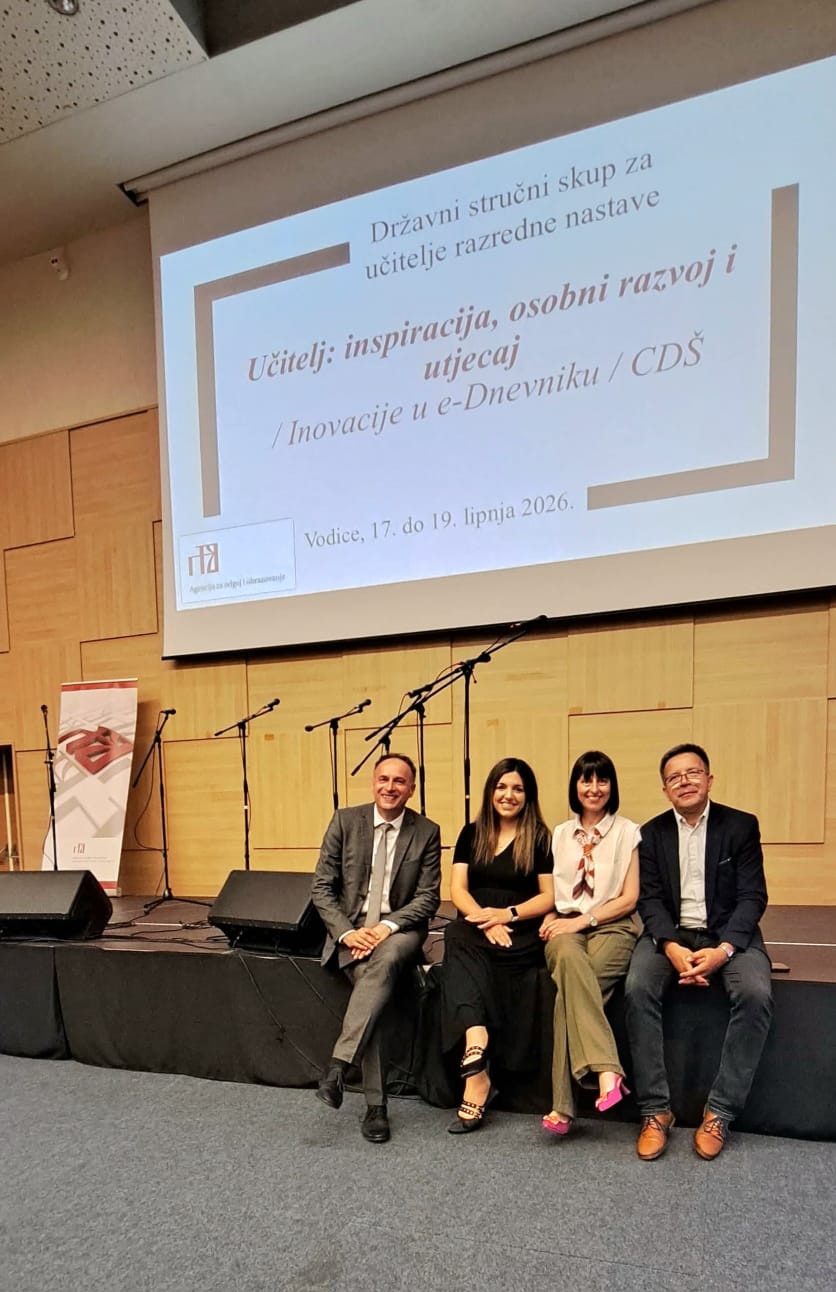
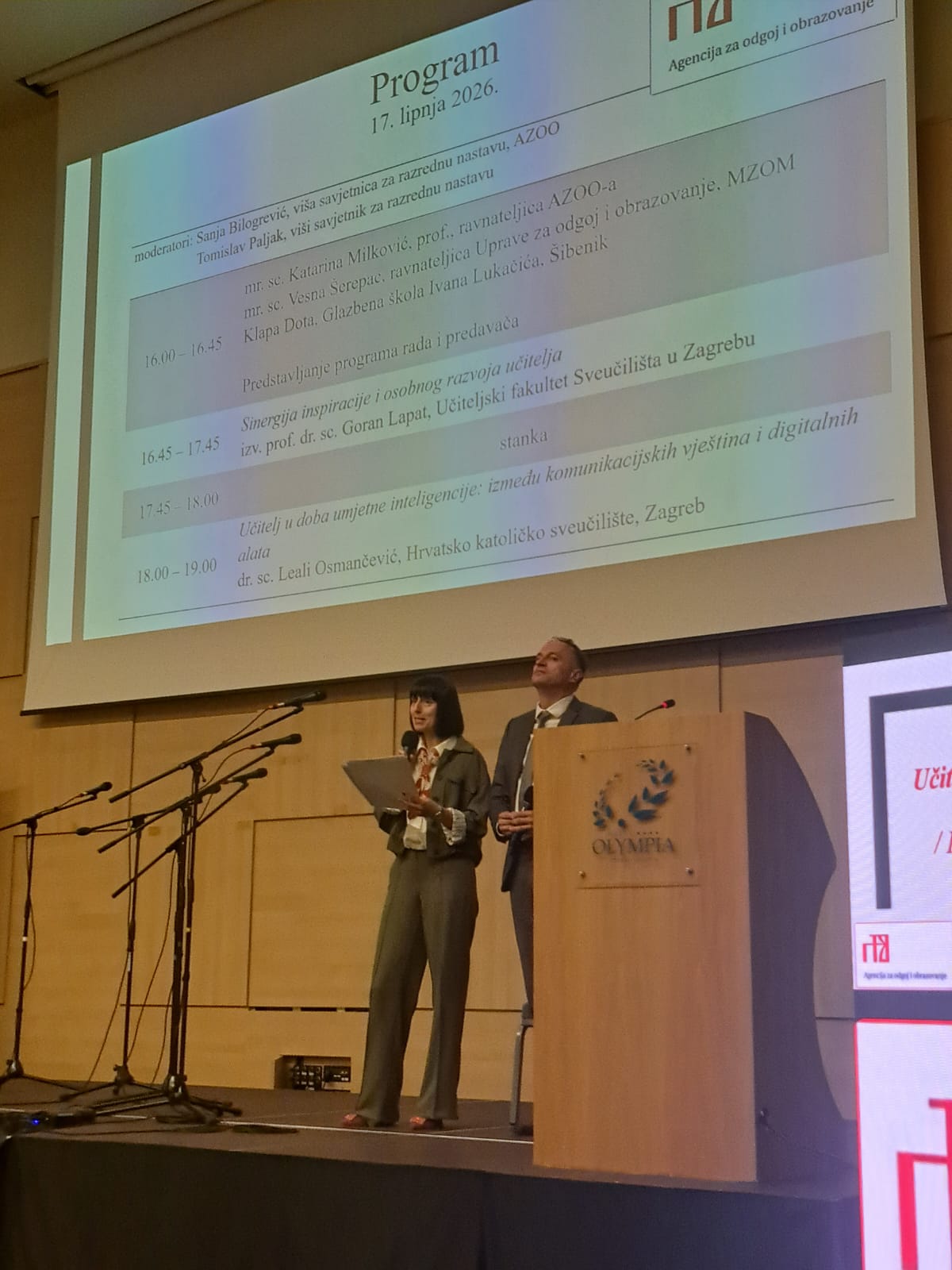
On June 17, 2026, Dr. Leali Osmančević, Senior Teaching and Research Assistant at the University Department of Communication Studies of the Catholic University of Croatia, delivered an invited lecture entitled “The Teacher in the Age of Artificial Intelligence: Between Communication Skills and Digital Tools” at the National Professional Conference for Primary School Teachers in Vodice. The lecture was held as part of the conference opening ceremony and was attended by nearly 500 primary school teachers from across Croatia.
The conference, organized by the Agency for Education and Training, took place from June 17 to 19, 2026, at the Hotel Olympia. It brought together experts in pedagogy, psychology, media and digital literacy, and primary education. The programme was opened by representatives of the Agency for Education and Training and the Croatian Ministry of Science, Education and Youth, alongside keynote lectures delivered by Associate Professor Goran Lapat, PhD, from the University of Zagreb Faculty of Teacher Education and Dr. Leali Osmančević from the Catholic University of Croatia.
In her presentation, Dr. Osmančević emphasized that artificial intelligence does not replace teachers but rather changes the way they can plan, prepare, and deliver instruction. Particular attention was given to the ways AI can support teachers in lesson preparation, differentiation of instruction, the creation of worksheets and visual materials, and administrative tasks. She also addressed the development of students’ media and digital literacy, strategies for teaching children the responsible and critical use of AI tools, and the most common mistakes in AI usage and how to avoid them.
The lecture included practical examples, demonstrations of effective and ineffective AI prompts, suggestions for classroom activities, and an overview of the most useful AI tools for primary school teachers.
The topic of artificial intelligence generated considerable interest among participants, who particularly highlighted the value of the practical examples, clear guidelines, and concrete tools that could be applied directly in teaching. The lecture also sparked discussion on the evolving role of teachers in digital environments, the ethical dimensions of AI use, and the need to develop new competencies in primary education.
The national professional conference was organized by the Agency for Education and Training with the participation of numerous speakers from academia and professional practice. The programme covered topics including teachers’ personal development and inspiration, inclusion and diversity in primary education, teachers’ mental health, digital tools in education, and examples of best practice from Croatian primary schools.