Share
First Theological Forum “UniCath Dialogues” Held at the Catholic University of Croatia
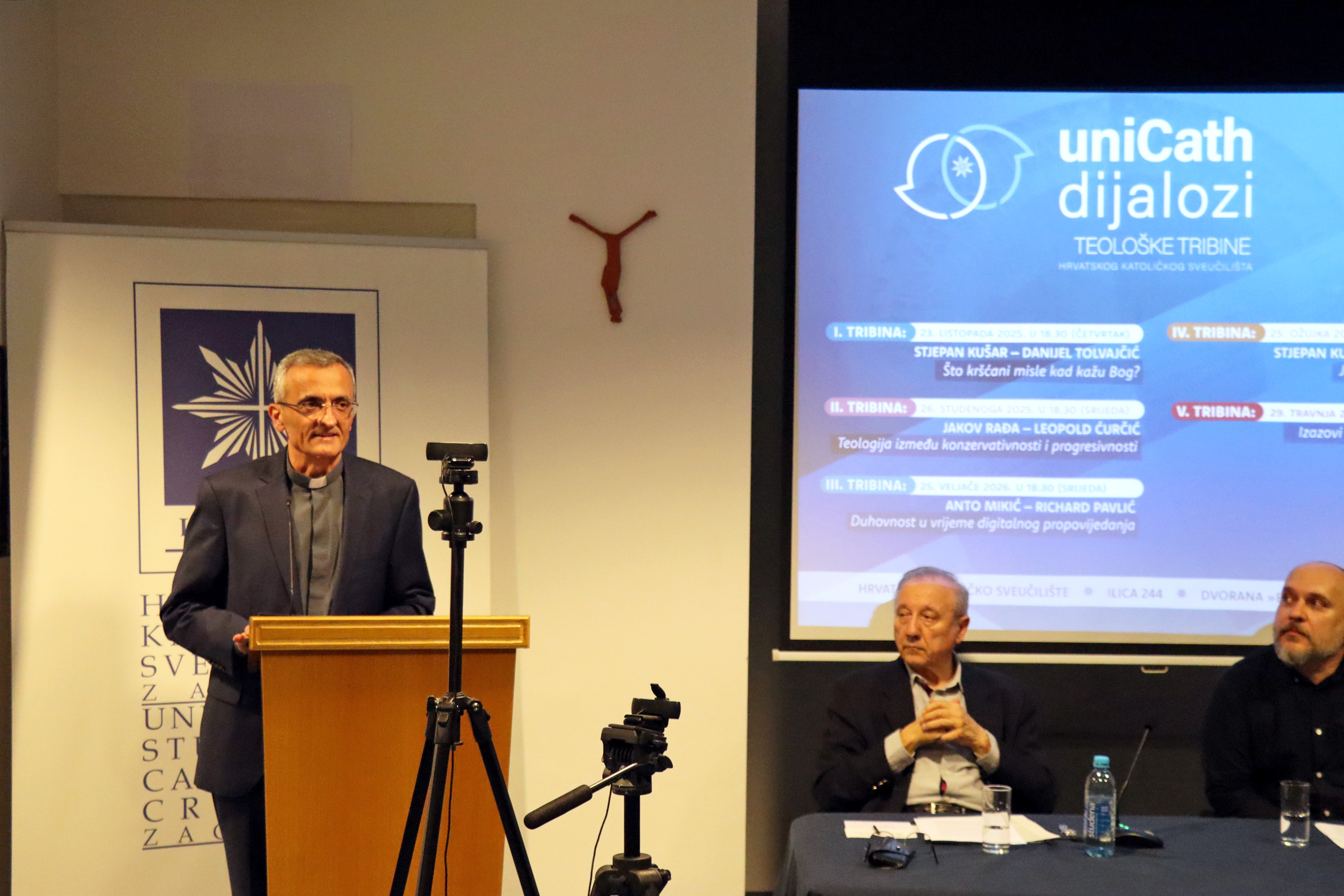
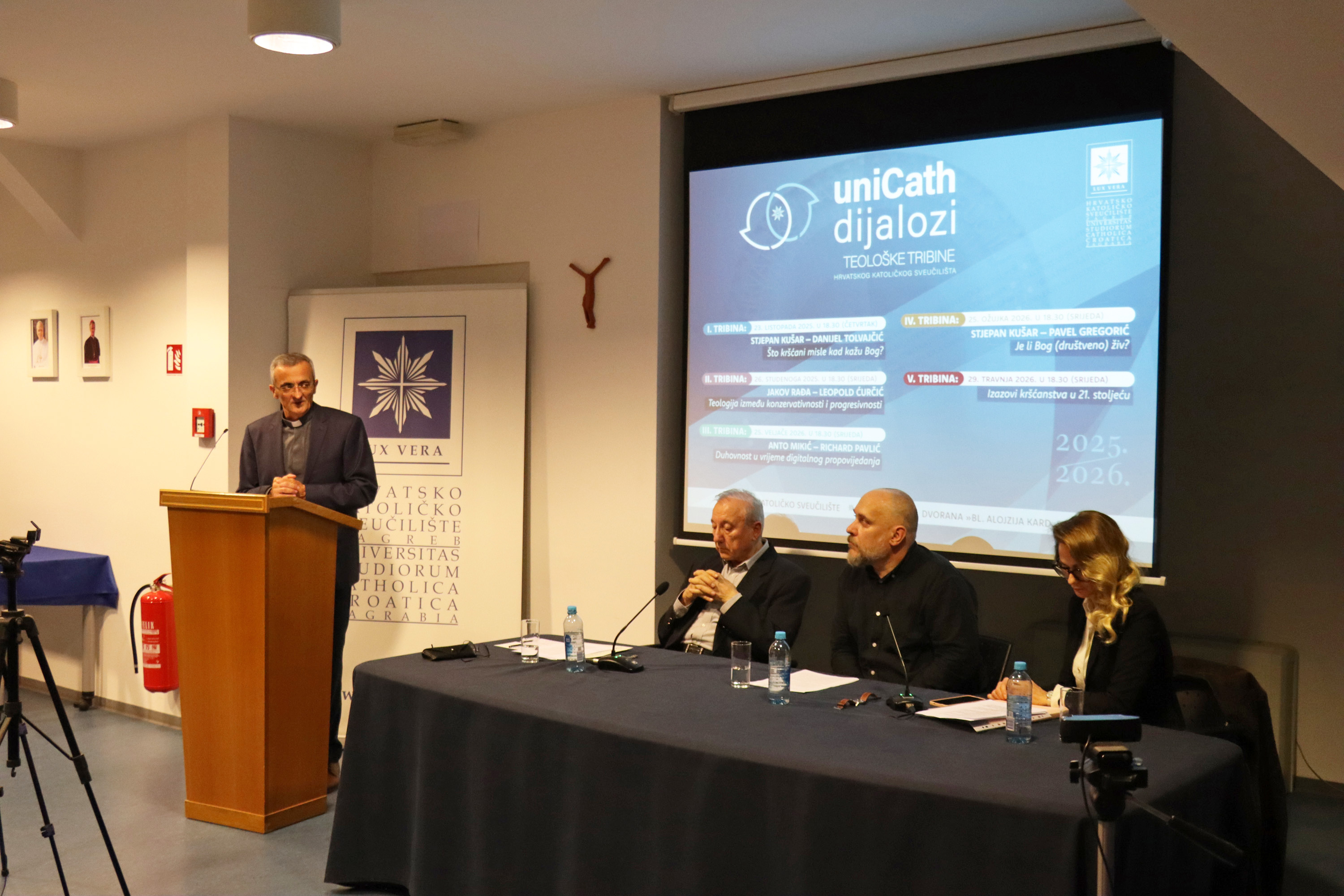
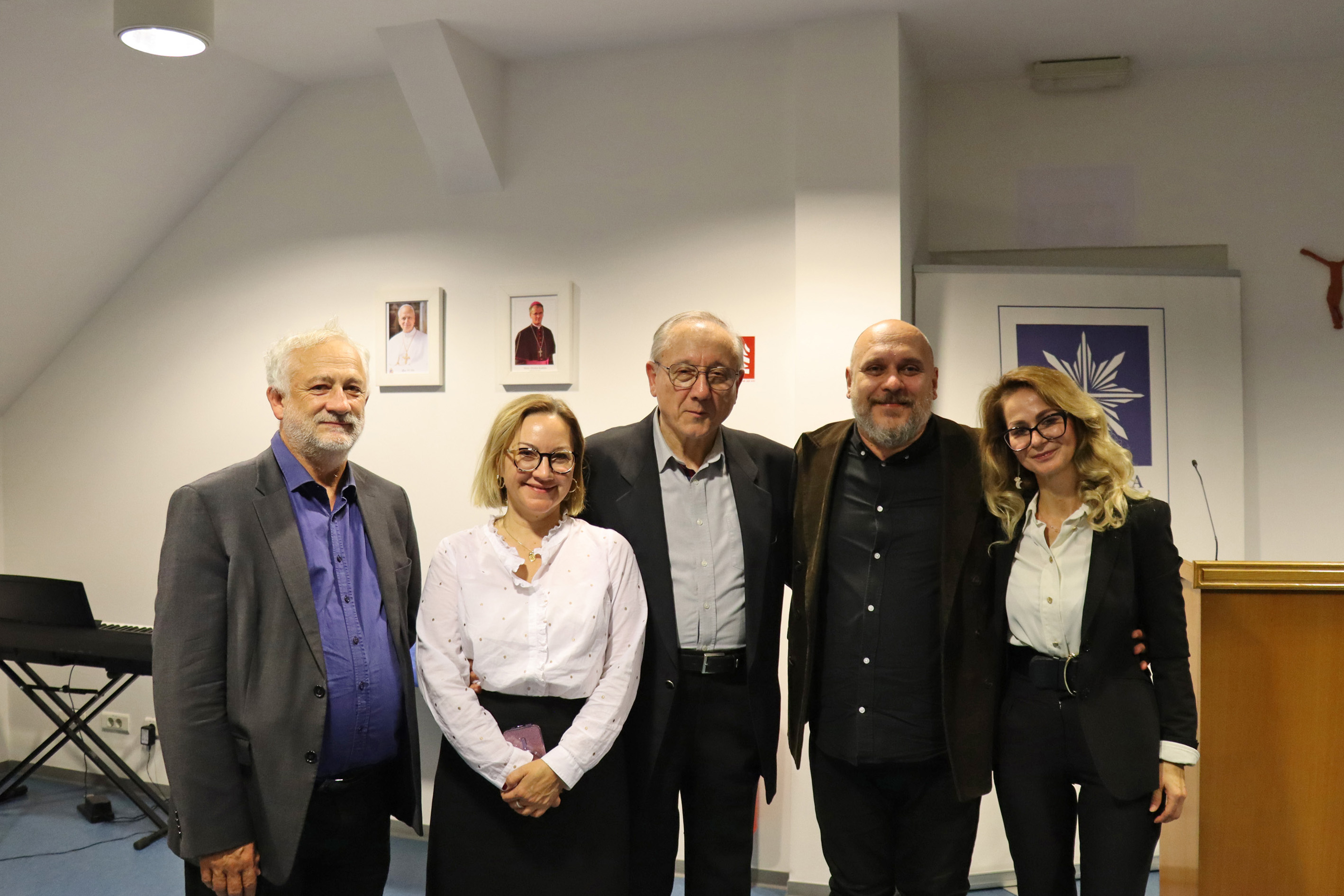
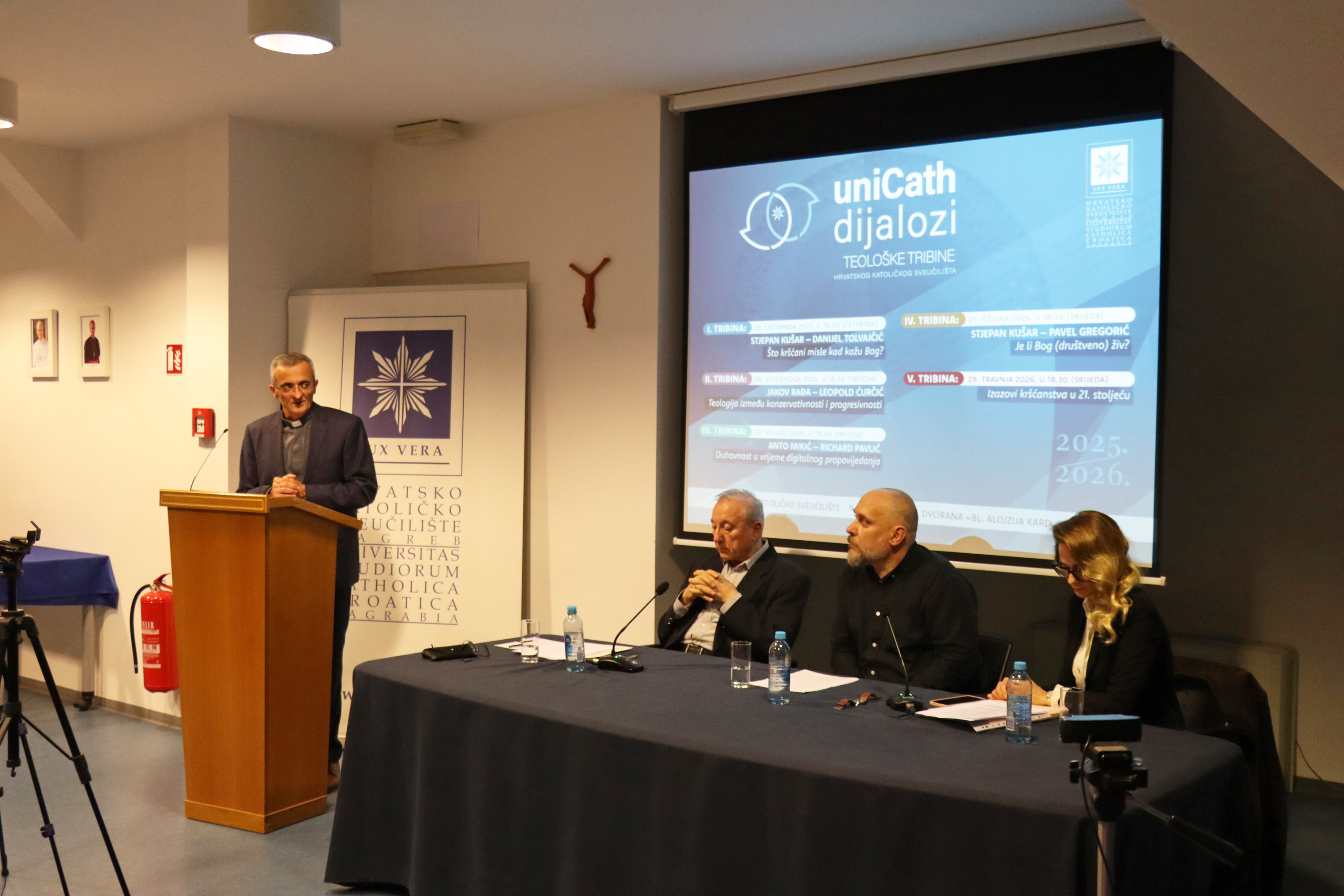
On Thursday, 23 October 2025, the Catholic University of Croatia held its first theological forum titled UniCath Dialogues.
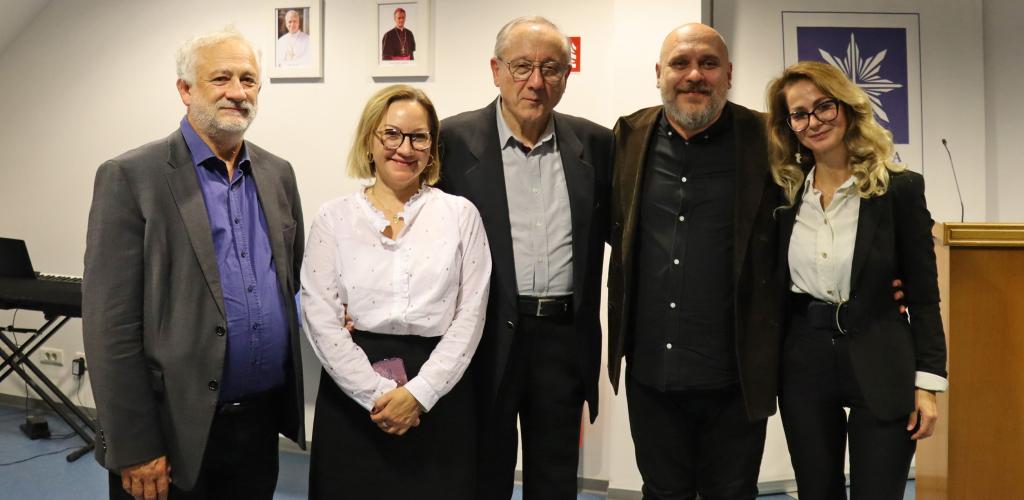
Following a brief introduction to the project by Assist. Prof. Kristina Vujica, Ph.D., and opening remarks by the Vice-Rector for Quality, Prof. Ante Crnčević, Ph.D., two distinguished speakers, Prof. Danijel Tolvajčić, Ph.D., and Prof. Stjepan Kušar, Ph.D., gave fifteen-minute presentations on the topic “What Do Christians Mean When They Say God?”
Prof. Tolvajčić highlighted the distinction between the gods of the Greek pantheon and the Christian understanding of God. The gods of the Greek and other religious traditions are beings—immensely powerful, yet still part of this world. In Christian tradition, however, God is not a being, not even the most perfect one. According to Scripture, God is not part of the world or of the totality of all that exists. Rather, God gives being to all that is, which implies both the Creator and the Sustainer—God who grants existence as long as things exist. Moreover, God did not have to create in order to be God. Nothing in creation can add to or diminish God’s being.
Drawing on the thought of Thomas Aquinas, Prof. Tolvajčić explained that the first and fundamental insight is that beings are. To have esse—to participate in being—marks the difference from nothingness. For Aquinas, existence does not follow from a being’s essence. We may know what a phoenix is by essence, but that does not imply it exists. Therefore, the cause of existence must be sought outside the being itself. Tracing causes cannot regress infinitely; there must be a first cause of existence that is itself uncaused—the One who gives being to all that is—God. Thus, beings do not possess their own cause of existence but receive it from what is esse per se—subsistent Being itself. This represents a theistic understanding of the Creator based on the created order, fully aligned with Scripture. Concepts such as Creator and creation ex nihilo are unknown to Greek philosophy—they are Jewish theological, not Greek philosophical, ideas. Therefore, the notion of esse represents a radical novelty not found in Aristotle or Greek thought in general.
Prof. Kušar began his presentation by reflecting on what God is not. Citing Immanuel Kant, he reminded the audience of the three passions that drive human life: the passion for possession, recognition, and power—passions that Jesus rejects in His temptation in the desert. As vital as these drives may be, Jesus shows that “man does not live by bread alone, but by every word that comes from the mouth of God” (Mt 4:4). God does not act according to human expectations—He is not a guarantor of prosperity or utility. Faith in God does not mean believing in His existence (for “even the demons believe—and tremble,” Jas 2:19) but placing one’s trust and hope in the love that God is. As the Apostle John writes, “God is love.”
Through Jesus’ life and actions—His surrender to the Father and His service to humanity—God reveals Himself as the Triune God, the dynamic communion of love among the Father, Son, and Holy Spirit, and in relation to creation—as Creator, Redeemer, and Sanctifier. Creation, history (Jesus Christ), and community (the Church) are experiential dimensions of this Trinitarian revelation. The Incarnation of the Word (Logos) in Jesus affirms that God fully embraces human nature. In Baptism, our personal name becomes inseparably linked with God’s name, establishing both the foundation and the orientation of our lives according to the measure of Jesus Christ. Hence, God is “useful,” but on His own terms—for us.
After the presentations, a lively discussion followed. The “Blessed Alojzije Cardinal Stepinac” Hall was filled to capacity, with participants including students from the XV Gymnasium and the First School of Economics, as well as many university students and professors.
Reflecting on the theme “What Do Christians Mean When They Say God?”, one can conclude: The long Christian tradition reveals God as newness, unexpectedness, and the One who profoundly concerns us. Such a God calls for our active engagement, marked by humility before the mystery of His ineffable and incomprehensible nature. The God who gives being to all that is, and sustains it in being, is the same God who in Jesus Christ revealed the fullness of His love. A right understanding of God is vital—for where God is misunderstood, so too is the human person, and where humanity is misunderstood, so too is God.
One participant beautifully summarized the experience:
“Attending the forum felt like visiting Willy Wonka’s chocolate factory. After so many theological and philosophical delicacies, one feels like a child overflowing with joy and wonder. Just as a sugar rush calls for physical activity, this theological-philosophical feast invites us to contemplate, imagine, and write.”
(Marina Bucić)
Text by: Assist. Prof. Kristina Vujica, Ph.D.