Share
Priests’ Day of the Archdiocese of Zagreb dedicated to the Sacrament of Reconciliation held at the Catholic University of Croatia
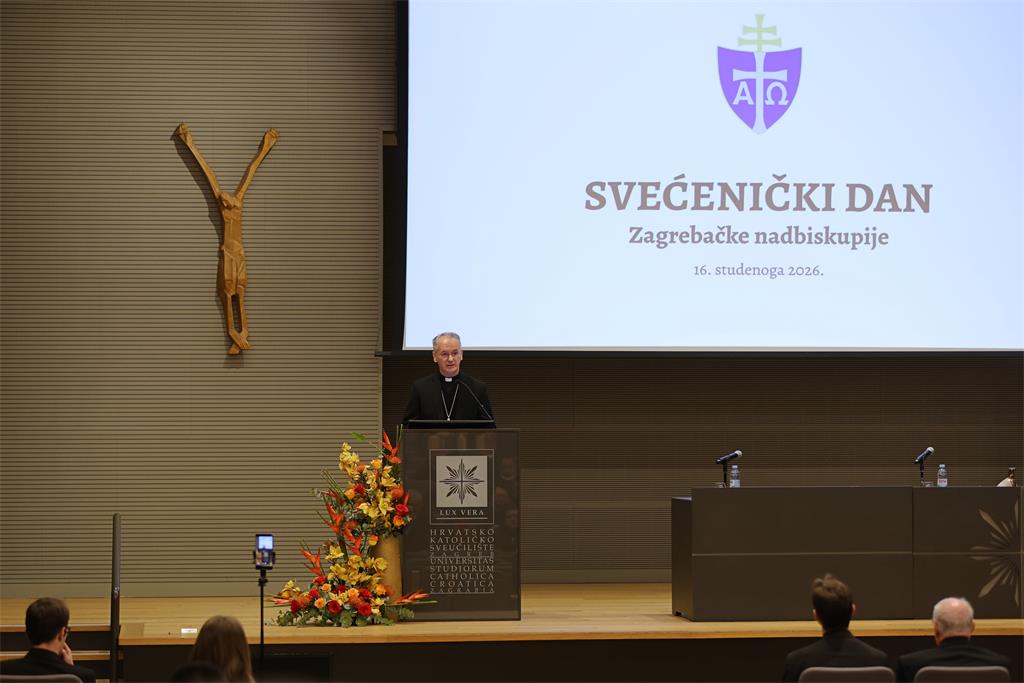
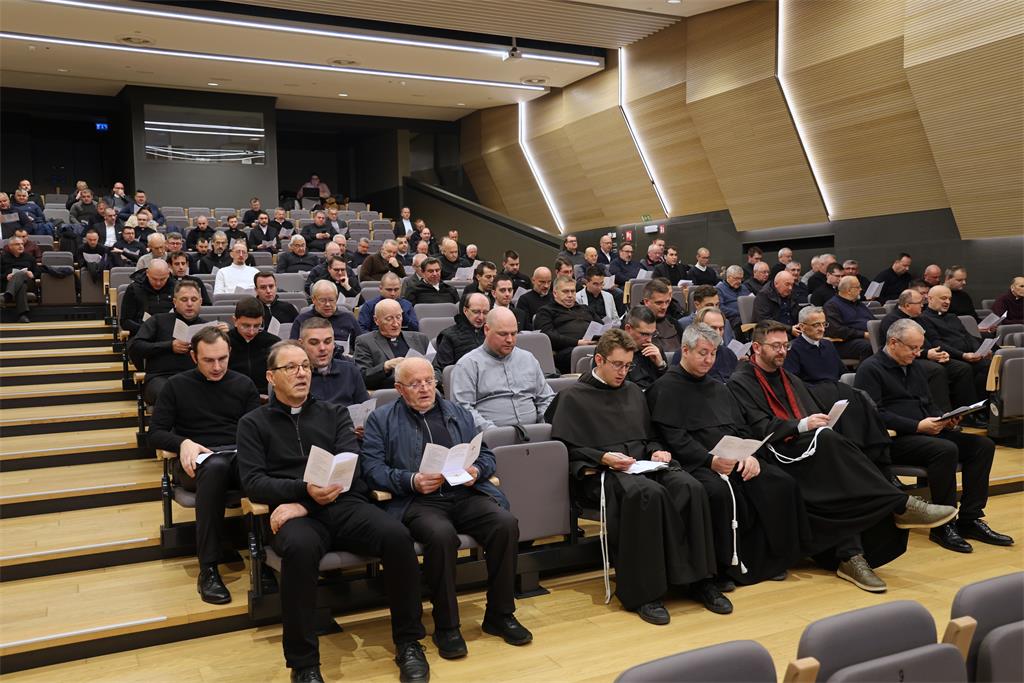
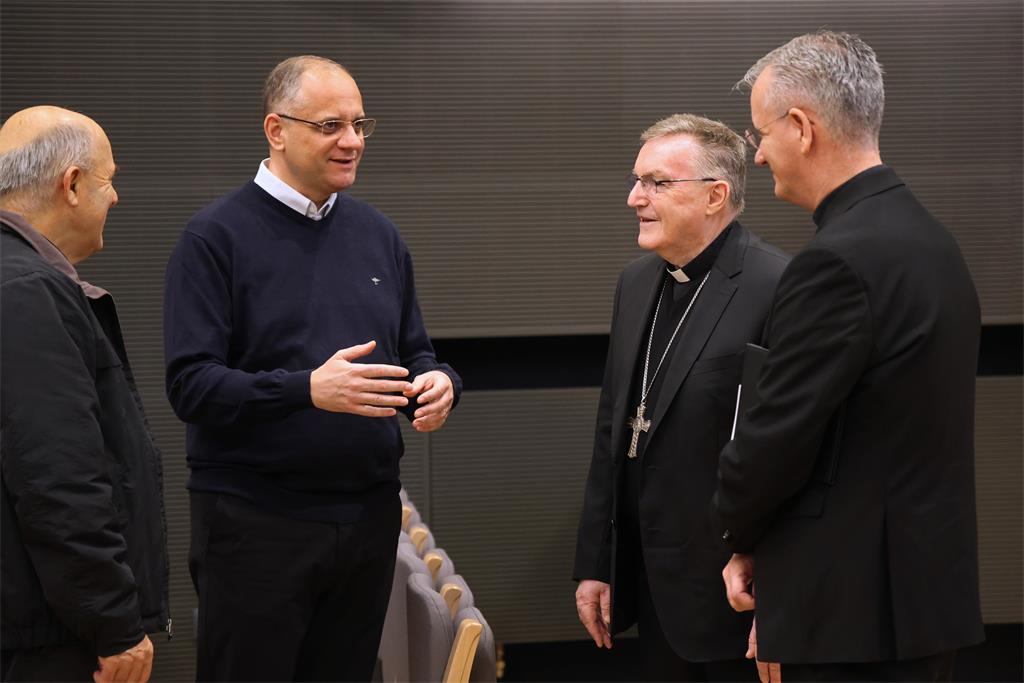
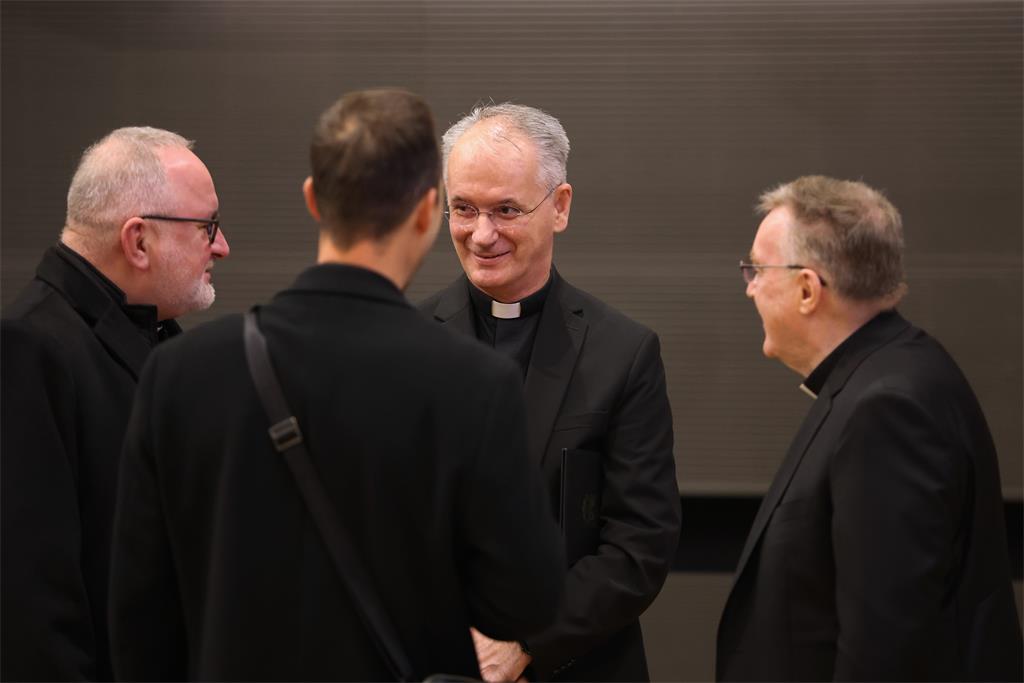
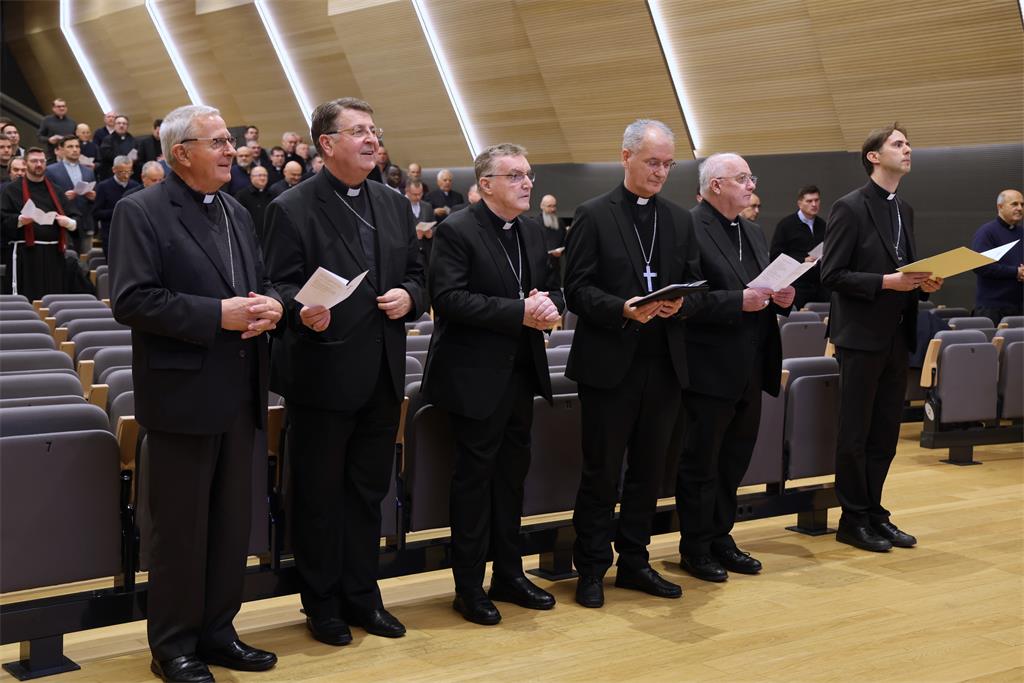
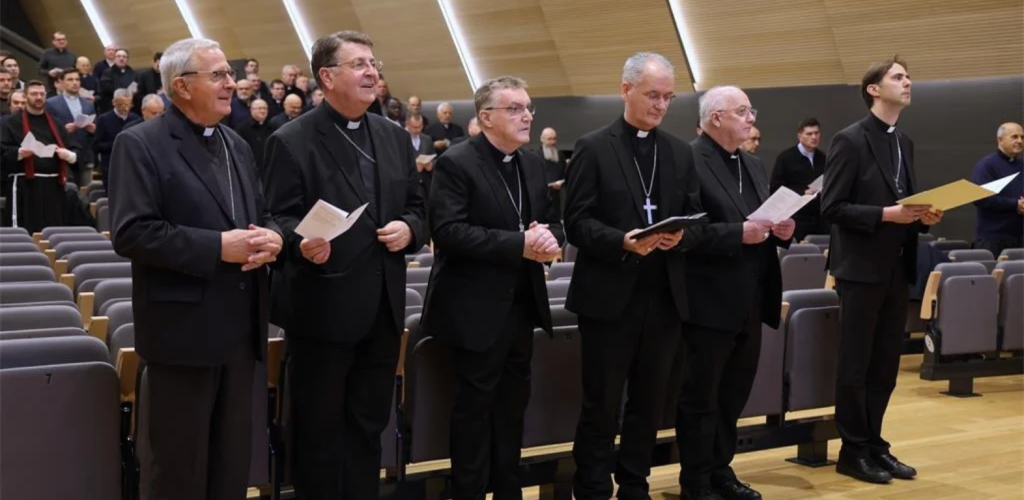
On Monday, November 16, 2026, the Priests' Day of the Archdiocese of Zagreb was held in the Great Hall of the Catholic University of Croatia. This year's gathering focused on the theme “The Sacrament of Reconciliation in the Face of the Challenges of Contemporary Culture and Society”. The event brought together priests of the Archdiocese of Zagreb and speakers who addressed the importance and challenges of the Sacrament of Reconciliation from theological, pastoral, liturgical and canon law perspectives.
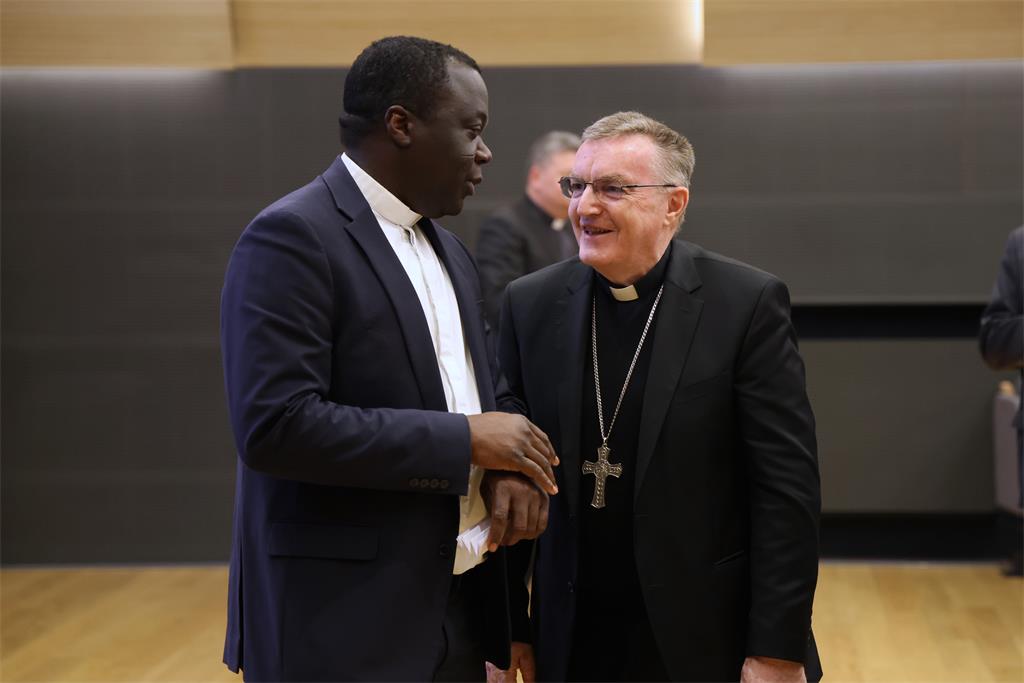
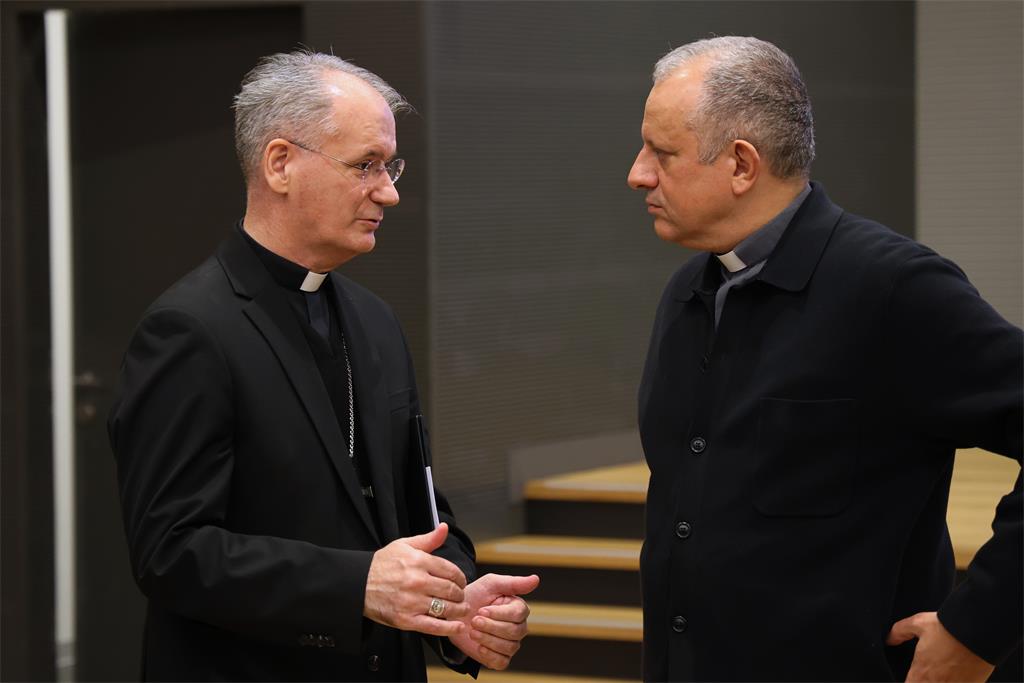
The gathering was attended by Archbishop of Zagreb Dražen Kutleša, Cardinal Josip Bozanić, Archbishop Emeritus of Zagreb, Auxiliary Bishops Ivan Šaško, Mijo Gorski, Vlado Razum and Marko Kovač, as well as numerous priests of the Archdiocese of Zagreb and those serving within its territory.
Following the opening prayer, Archbishop Dražen Kutleša addressed those gathered, emphasising that the Sacrament of Reconciliation holds a special place in the life and mission of every priest. Speaking about the challenges of contemporary society, he pointed to the contradiction of a culture inclined to publicly condemn others while finding it increasingly difficult to recognise and acknowledge its own mistakes and sins.
“A culture that denies sin does not become more compassionate. It becomes more merciless. If there is no sin, there is no forgiveness,” the Archbishop stated, emphasising that this is precisely why the Sacrament of Reconciliation is one of the most precious gifts the Church can offer to people today.
Drawing on the biblical encounter between the prophet Nathan and King David, the Archbishop spoke about the responsibility of confessors, highlighting the importance of pastoral wisdom, patient listening and courage in proclaiming the truth. “A confessor is not an investigator. He is a physician and a brother,” he emphasised, reminding those present that a priest is called not merely to point out sin but, above all, to be a minister of God's mercy and forgiveness.
He particularly stressed the importance of priests' personal spiritual lives and their regular participation in the Sacrament of Reconciliation. “Only someone who regularly kneels as a penitent can credibly sit as a confessor,” Archbishop Kutleša stated.
The programme continued with three thematic presentations. Rev. Assistant Professor Milan Dančuo, PhD, Commissioner for the Formation of Permanent Deacons and Head of the Department of Liturgical Studies at the Catholic Faculty of Theology, University of Zagreb, spoke about the liturgical and pastoral aspects of the Sacrament of Reconciliation. He emphasised the importance of the parish community and a comprehensive understanding of the sacrament as an encounter with God's mercy rather than merely the fulfilment of a religious obligation.
“Only when a parish lives as a community of the baptised, aware of their call to holiness and gathered around the Eucharist, does the Sacrament of Reconciliation cease to be merely a pious obligation or formality,” Dančuo emphasised.
Rev. Ivan Grbešić, MSc, spiritual director at the Archdiocesan Seminary in Zagreb, addressed the pastoral challenges of the ministry of confession. In his presentation, he stressed the importance of helping the faithful recognise the acknowledgement of sin as an opportunity for spiritual renewal and liberation.
“Our pastoral challenge is not merely to speak about sin again, but to help people discover that acknowledging sin is not humiliation, but a path towards freedom, recovery, healing and new life,” Grbešić stated.
The canon law dimension of the Sacrament of Reconciliation was presented by Very Rev. Professor Josip Šalković, PhD, Judicial Vicar of the Interdiocesan Tribunal of First Instance in Zagreb and Head of the Department of Canon Law at the Catholic Faculty of Theology, University of Zagreb. Discussing the Church's legal provisions, he highlighted their role in protecting the rights of the faithful and ensuring the proper administration of the sacrament.
“Even somewhat strict legal safeguards enable the faithful to approach God's mercy without fear, while providing priests with the legal certainty needed to remain faithful to Christ and the Church,” Šalković emphasised.
The presentations were followed by a discussion during which participants had the opportunity to further explore current challenges related to the ministry of confession and pastoral work in contemporary society.
In the final part of the gathering, Professor Željko Tanjić, PhD, Rector of the Catholic University of Croatia, addressed the participants. He presented the University's activities, its development and progress to date, as well as current initiatives aimed at further strengthening its academic and scientific work.
The Priests' Day of the Archdiocese of Zagreb concluded with the Angelus prayer and a communal meal.