Share
Workshop “Accusation, Verdict, Privilege” held at the Faculty of Humanities and Social Sciences in Rijeka
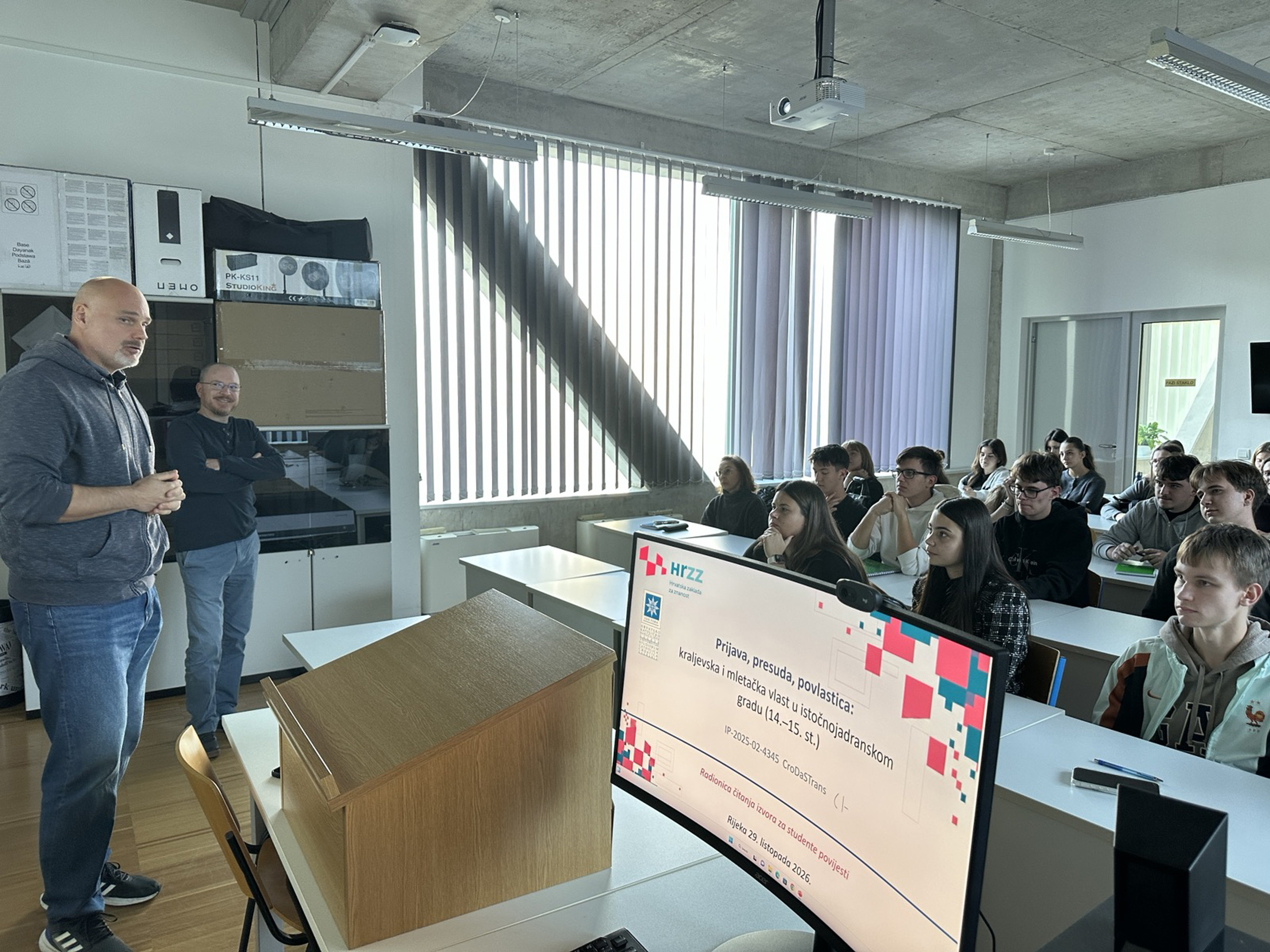
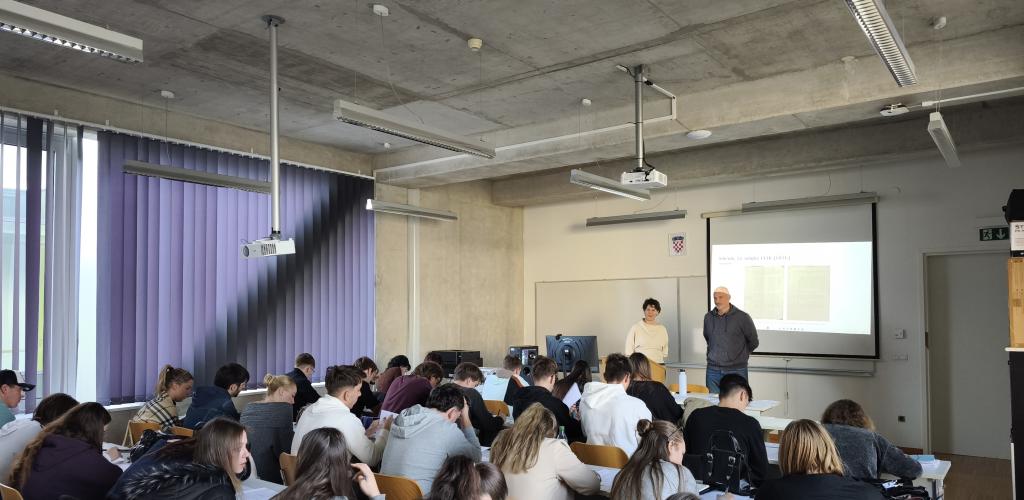
As part of the Croatian Science Foundation project “The Formation of the Territorial State in Late Medieval Croatia, Dalmatia and Slavonia: Socio-Political and Administrative Transformations” (CroDaSTrans, IP-2025-02-4345), a workshop entitled “Accusation, Verdict, Privilege: Royal and Venetian Authority in Eastern Adriatic Cities (14th–15th Centuries)” was held on October 29, 2026, at the Faculty of Humanities and Social Sciences, University of Rijeka. The workshop was led by the project leader, Prof. Ivan Majnarić, PhD, and project collaborators Zrinka Pešorda Vardić, PhD, and Assoc. Prof. Tomislav Popić, PhD.
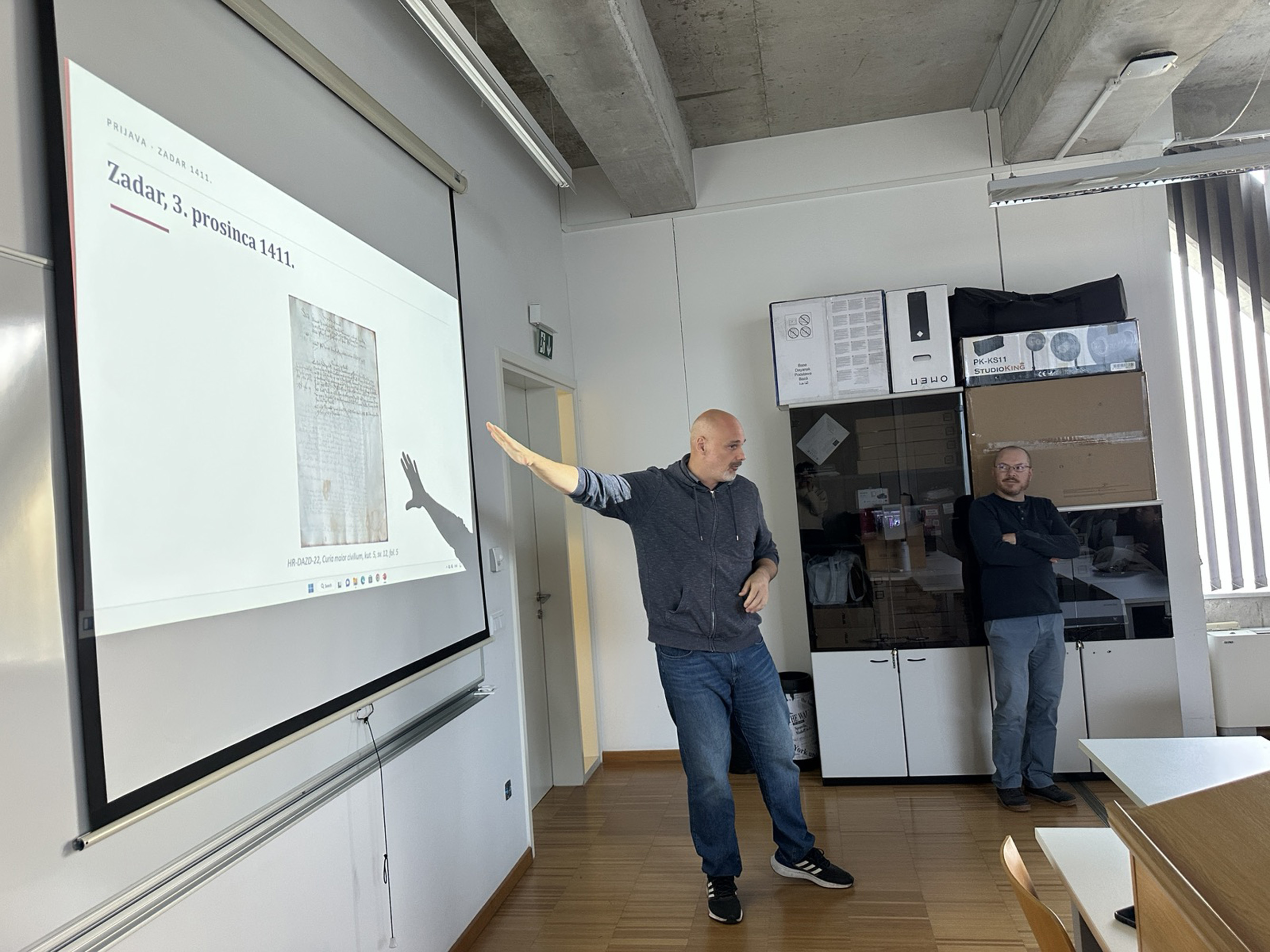
The workshop demonstrated to students how medieval authority manifested itself in the everyday life of Dalmatian cities through documents produced by courts and administrative offices. Participants worked with original historical sources, examining reproductions of manuscripts alongside Latin transcriptions and their translations, and tracing the stages of judicial proceedings, from the initial complaint and investigation to the final verdict.
The first source, dating from 1411 and originating from the Great Civil Court of Zadar, records a complaint against an individual who failed to respond to a court summons and insulted both the court messenger and the court seal. The second source, a document from the Šibenik chancery dating from 1431, follows proceedings initiated by the Venetian count against a salt smuggler. The third source, a ducal decree issued by the Council of Ten to the rectors of Zadar in 1458, reveals how the central Venetian authorities shaped and directed life in the city.
Through direct engagement with historical sources, students became familiar with fundamental concepts of late medieval administration. They also encountered challenges historians face when working with manuscripts, including deciphering abbreviations, interpreting ambiguous passages, establishing dates, and verifying monetary amounts recorded in court judgments.
In this way, the workshop, primarily intended for students, brought the findings of the research project directly into university teaching.