
Share
Faculty Members from Psychology Department Participate in INTERSECT Conference
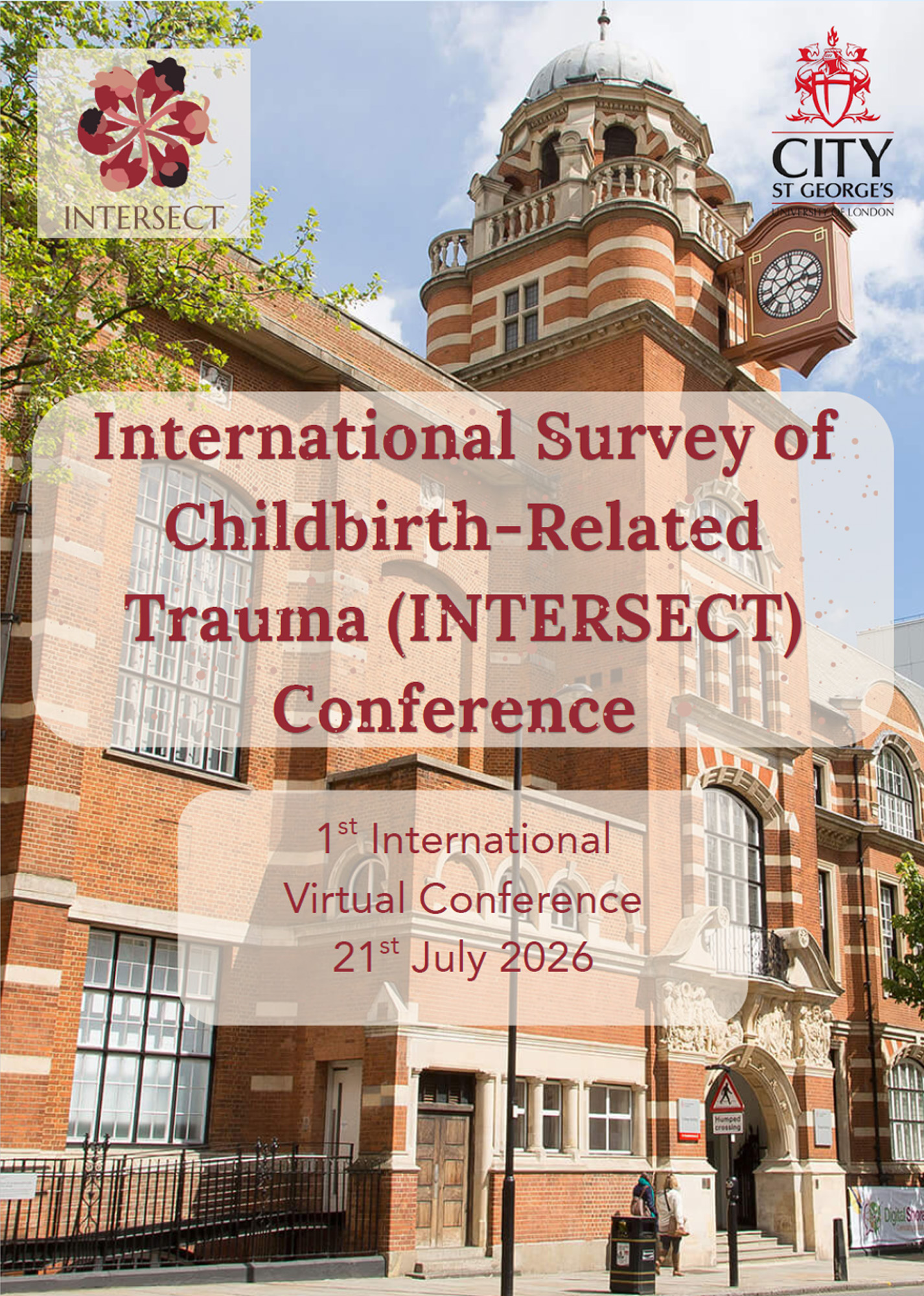
Faculty members from the University Department of Psychology participated in the International Survey of Childbirth-Related Trauma (INTERSECT) Conference, a virtual event held on July 21, 2026. This was the first international conference organized by the INTERSECT collaboration—an initiative spanning 50 countries led by Professor Susan Ayers (City St George's, University of London). The Croatian team, led by Associate Professor Sandra Nakić Radoš, PhD, participated as part of the approved scientific project at the Catholic University of Croatia titled Determinants, Outcomes, and Interrelationships of Women's Mental and Physical Health During Pregnancy and After Childbirth (MumHealth).
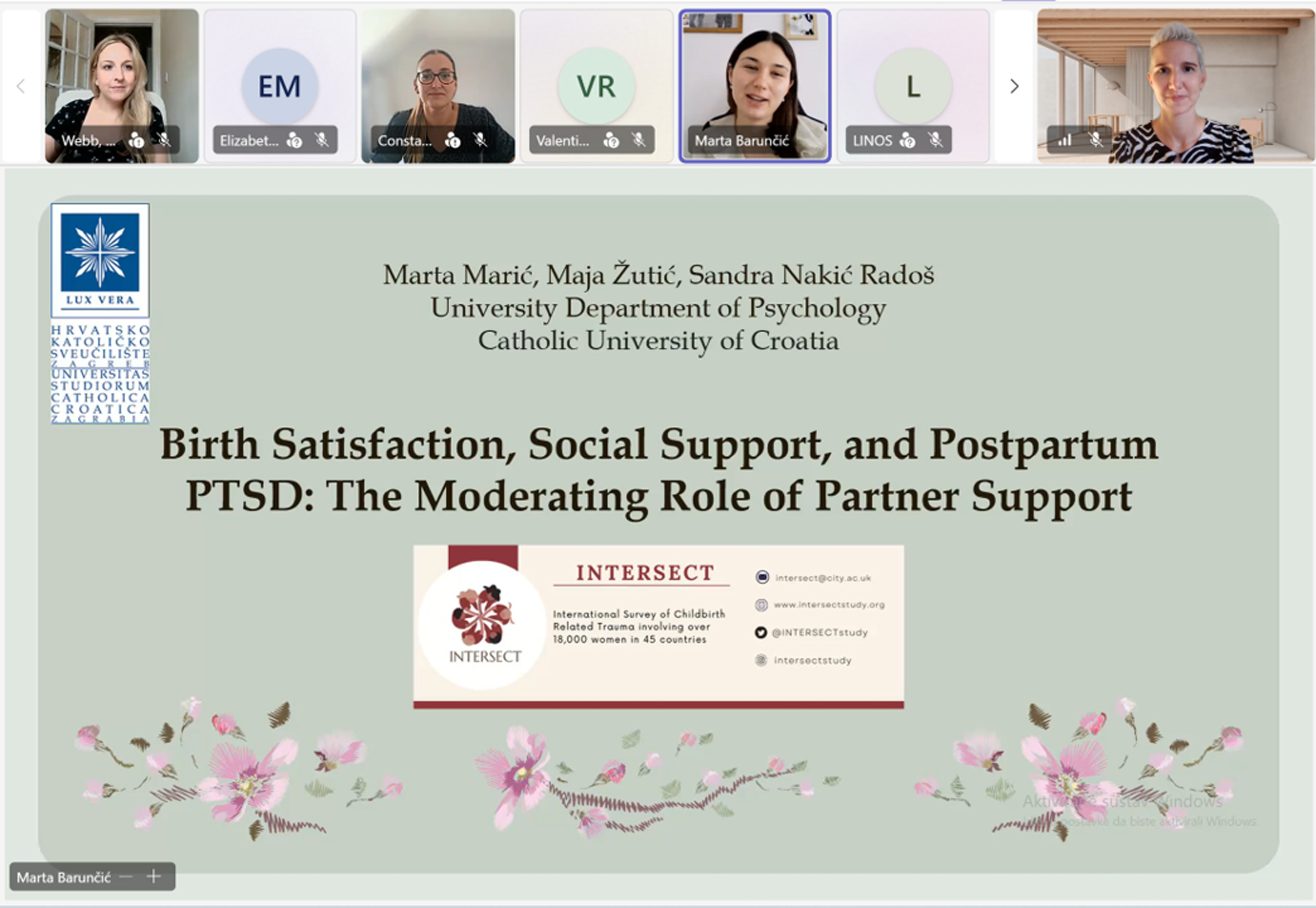
Graduate student Marta Marić, under the mentorship of Maja Žutić, PhD, and Nakić Radoš, presented on the topic "Birth Satisfaction, Social Support, and Postpartum PTSD: The Moderating Role of Partner Support," sharing findings from her defended master's thesis.
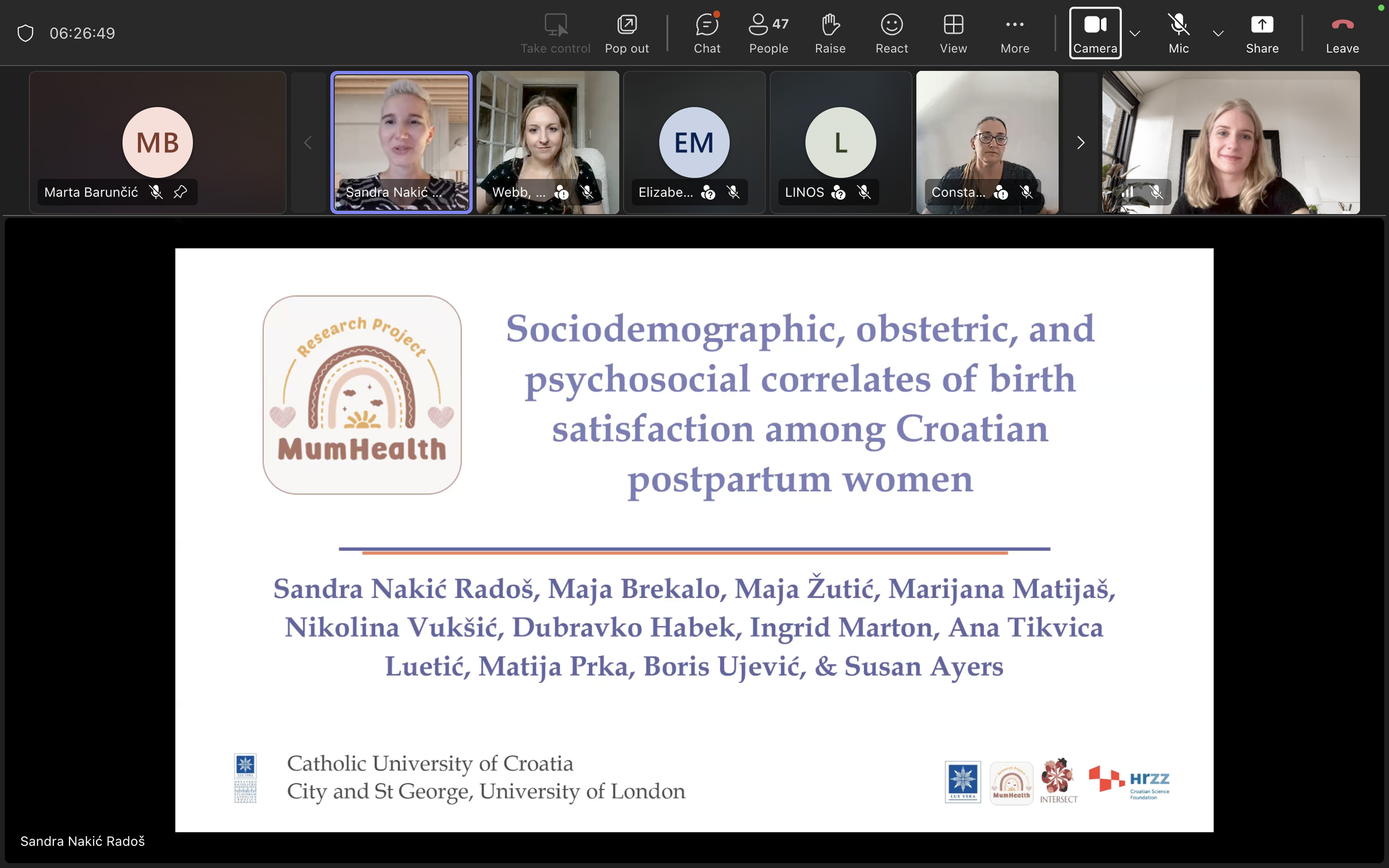
Nakić Radoš, co-authoring with Maja Brekalo, Maja Žutić, Marijana Matijaš, Nikolina Vukšić, Dubravko Habek, Ingrid Marton, Ana Tikvica Luetić, Matija Prka, Boris Ujević, and Susan Ayers, presented research from the MumHealth project titled "Sociodemographic, Obstetric, and Psychosocial Correlates of Birth Satisfaction Among Croatian Postpartum Women."
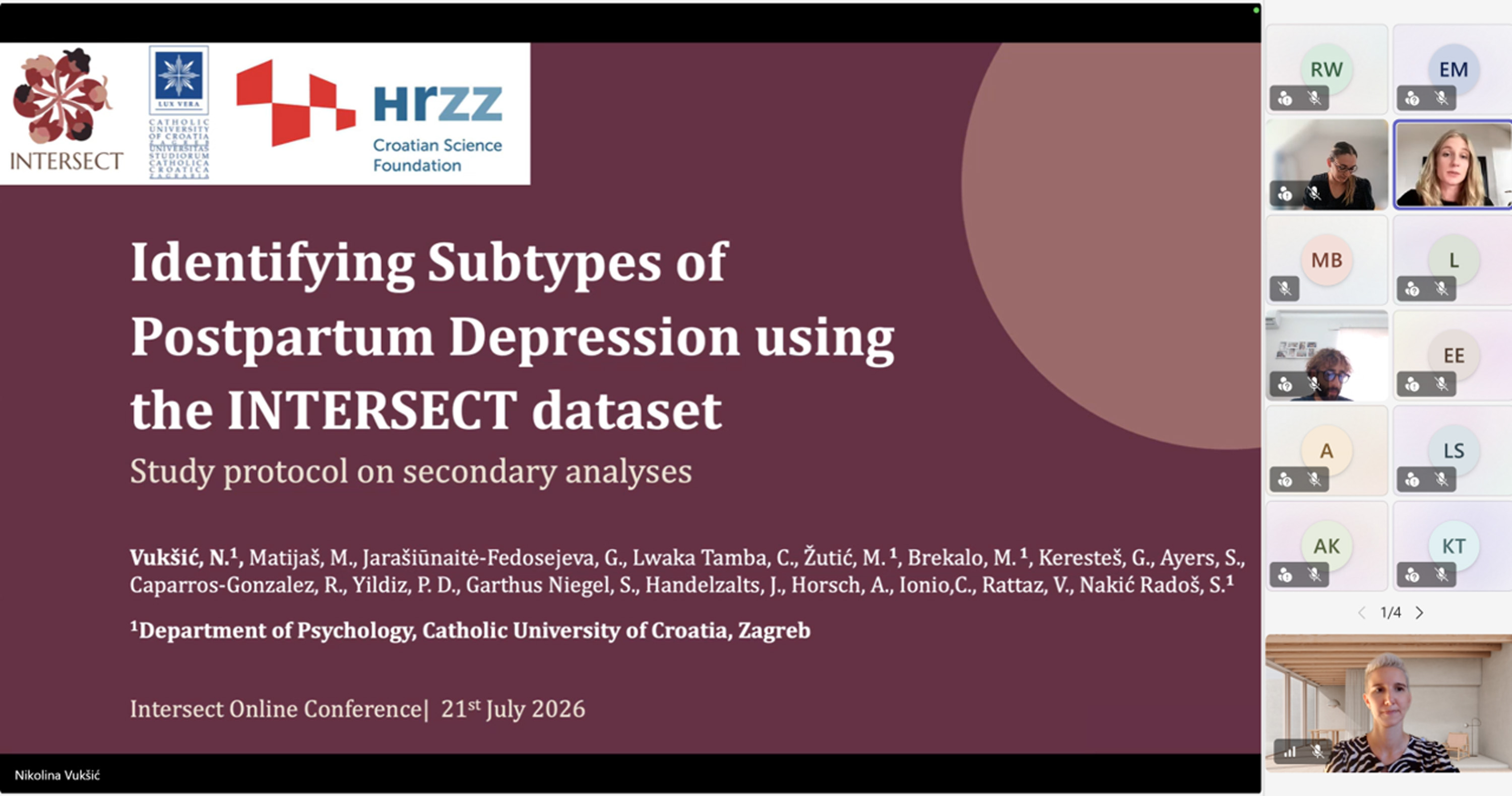
Nikolina Vukšić presented a research protocol using secondary data from the INTERSECT collaboration, co-authored by Marijana Matijaš, Gabija Jarašiūnaitė-Fedosejeva, Cox Lwaka Tamba, Maja Žutić, Maja Brekalo, Gordana Keresteš, Susan Ayers, Rafael Caparros-Gonzalez, Pelin Dikmen Yildiz, Susan Garthus Niegel, Jonathan Handelzalts, Antje Horsch, Chiara Ionio, Valentine Rattaz, and Sandra Nakić Radoš. The presentation, titled "Identifying Subtypes of Postpartum Depression Using INTERSECT Data: A Study Protocol," will form a part of her doctoral dissertation.
Nakić Radoš was also a co-author on two additional presentations: "Developing a Short Version of the Postpartum Bonding Questionnaire Across Five European Countries: Methodological and Psychometric Insights," presented by Gabija Jarašiūnaitė-Fedosejeva (Lithuania), and "Global Income Disparity and Postpartum Depression: Network Analysis of Socioeconomic and Clinical Risk Factors," presented by Sergio Martínez Vázquez (Spain).
The conference featured numerous findings based on national and international data regarding childbirth trauma, postpartum post-traumatic stress disorder, and other related mental health conditions in mothers and fathers. Presenters highlighted various risk factors and developmental mechanisms that hold important implications for creating prevention and intervention programs designed to support the well-being of mothers, fathers, and infants.