Share
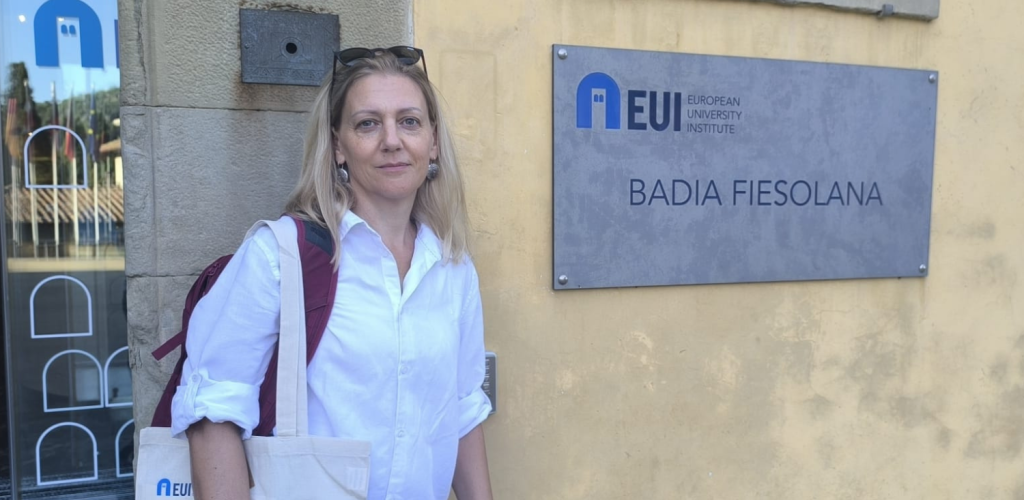
Associate Professor Puljizević delivers a lecture at the European University Institute in Florence
Associate Professor Kristina Puljizević, PhD, from the University Department of History at the Catholic University of Croatia, delivered a research lecture on October 19, 2026, at the European University Institute (EUI) in Florence, one of Europe's leading centres for postgraduate education and research in the social sciences and humanities.
The lecture, entitled “An Early Modern Institution in a Modern Age? Interpreting the Habsburg Sanitary Cordon on the Dalmatian-Ottoman Border”, was organised by the Department of History and Civilisation at the European University Institute and the Widening Europe programme. It took place at the historic Villa Salviati complex.
The lecture formed part of Professor Puljizević's two-month research stay at the EUI, from September 1 to October 31, 2026, as a recipient of the prestigious Fernand Braudel Senior Fellowship under the Widening Europe programme. The programme aims to strengthen international connections, research excellence and the competitiveness of scholars from European countries that are underrepresented in international research networks.
The lecture focused on the reorganisation of the Habsburg sanitary cordon along the border between Dalmatia and the Ottoman Empire during the first decades of the 19th century. This complex system of border surveillance, control over the movement of people and goods, and prevention of the spread of infectious diseases played an important role in the medical, economic and political history of the Habsburg Monarchy.
Particular attention was given to the efforts of the Habsburg authorities to establish a system of sanitary protection in Dalmatia, following its incorporation into the Monarchy, based on regulations already in force in the Croatian Military Frontier. Local circumstances, particularly the plague epidemic of 1815 and 1816, significantly influenced the implementation of the planned measures.
Professor Puljizević also examined the broader historical context of the sanitary cordon's operation, including changes in medical theories concerning the transmission of infectious diseases, criticism of quarantine systems, and the relationship between state public health policies, economic interests and the everyday lives of people living in border regions.
By raising the question of whether the sanitary cordon, an institution originating in the early modern period, could be considered an anachronism in an age of modernisation, the lecture opened a discussion on continuity and change in public health policy and the role of public health in the processes of modern state formation.
The research stay and lecture at the European University Institute provide an important opportunity to present research findings from the Catholic University of Croatia to the international academic community, exchange scholarly knowledge and develop future cooperation in the fields of the social history of medicine, the history of public health and 19th-century history.