Share
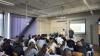
Sociologists and doctoral students at a scientific conference on Željko Mardešić
On the occasion of the 20th anniversary of the death of Željko Mardešić (1933–2006), a prominent Croatian sociologist and Catholic intellectual, an international scientific and professional conference entitled “A Rift in the Sacred – Rifts in Society: The Life and Work of Željko Mardešić” was held in Split on October 29 and 30, 2026. Organized by the Department of Sociology at the Faculty of Humanities and Social Sciences, University of Split, the conference brought together numerous Croatian and international scholars to discuss the contemporary relevance of Mardešić’s sociological thought, his work on religion, and his reflections on society. The conference was attended by Mardešić’s wife and other family members, as well as his close, long-standing collaborators. A Holy Mass in memory of Željko Mardešić was also celebrated in the student chapel, presided over by the Archbishop of Rijeka, Mate Uzinić.
Faculty members, doctoral students, and external associates of the University Department of Sociology at the Catholic University of Croatia also participated in the conference, presenting research exploring various aspects of Mardešić’s scholarly work.
A joint presentation was delivered by Matea Dadić, PhD, Teaching Assistant at the University Department of Sociology, and Prof. Gordan Črpić, PhD, Vice-Rector for Organization and Business Operations, entitled “Bridging the Divide: Željko Mardešić’s Conciliar Renewal as an Alternative to Integralism and Fundamentalism.” Their presentation examined Mardešić’s understanding of conciliar Christianity and dialogue as possible responses to contemporary tensions between integralism, fundamentalism, and modernity, emphasizing the importance of openness, connection, and dialogue in contemporary society.
Assoc. Prof. Ivana Brstilo Lovrić, PhD, Head of the University Department of Sociology, and Asst. Prof. Damir Mravunac, PhD, together with sociology doctoral student Josip Čunčić, presented a paper entitled “The Phenomenon of Death as a Sociological Mirror of Social Change.” Drawing on Mardešić’s analysis of the transition from traditional to modern and postmodern society, the authors examined death as an important sociological starting point for understanding changes in attitudes toward the body, community, the sacred, and everyday life. Particular attention was given to the medicalization, institutionalization, and privatization of death, as well as contemporary forms of the virtualization of death and transhumanist efforts to overcome mortality.
Teaching Assistant and doctoral student Paula Zujić presented a paper entitled “Female Catholic Spaces of Religiosity in the Contemporary Croatian Context.” Her presentation explored contemporary forms of Catholic women's networking and self-organization, analyzing various initiatives related to spiritual growth, community, belonging, and women's experiences. Her research drew on Mardešić’s reflections on emerging Church groups and communities.
Presentations were also delivered by students enrolled in the doctoral programme Sociology: Values, Identity and Social Changes in Croatian Society at the Catholic University of Croatia. Doctoral student Vlatka Linarić presented a paper entitled “Institutional Changes and the Challenges of Synodality in Light of Željko Mardešić’s Sociology of Religion,” while doctoral student Marina Bucić, together with Asst. Prof. Kristina Vujica, PhD, an external associate of the Catholic University of Croatia, presented a paper entitled “Small (Parish) Communities on the Synodal Journey.”
In addition to presenting her research, Head of Department Brstilo Lovrić moderated a session dedicated to peacebuilding, dialogue, and the responsibility of religions. She subsequently presented the session’s key arguments and conclusions during the conference’s final joint panel discussion.
The participation of faculty members, doctoral students, and associates of the University Department of Sociology provided an opportunity to showcase their research interests and scholarly work while contributing to an interdisciplinary examination of Mardešić’s rich intellectual legacy. The conference also created a space for discussion on the enduring relevance of his reflections on religion, modernity, dialogue, social divisions, and individual responsibility toward the community and contemporary society.
More information about the conference programme and presentation abstracts is available HERE.