Share
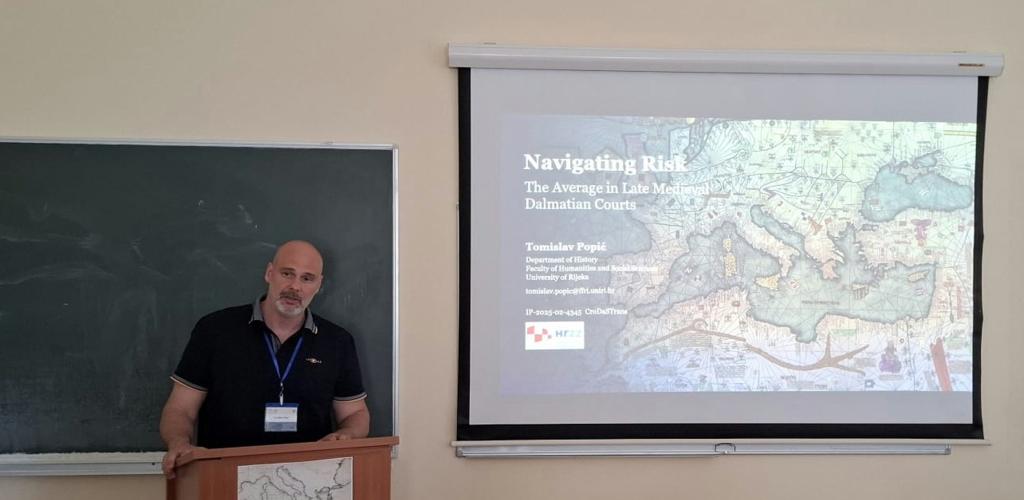
Associate Professor Tomislav Popić, PhD, participated in the international conference "7th International Conference of the Mediterranean Maritime History Network"
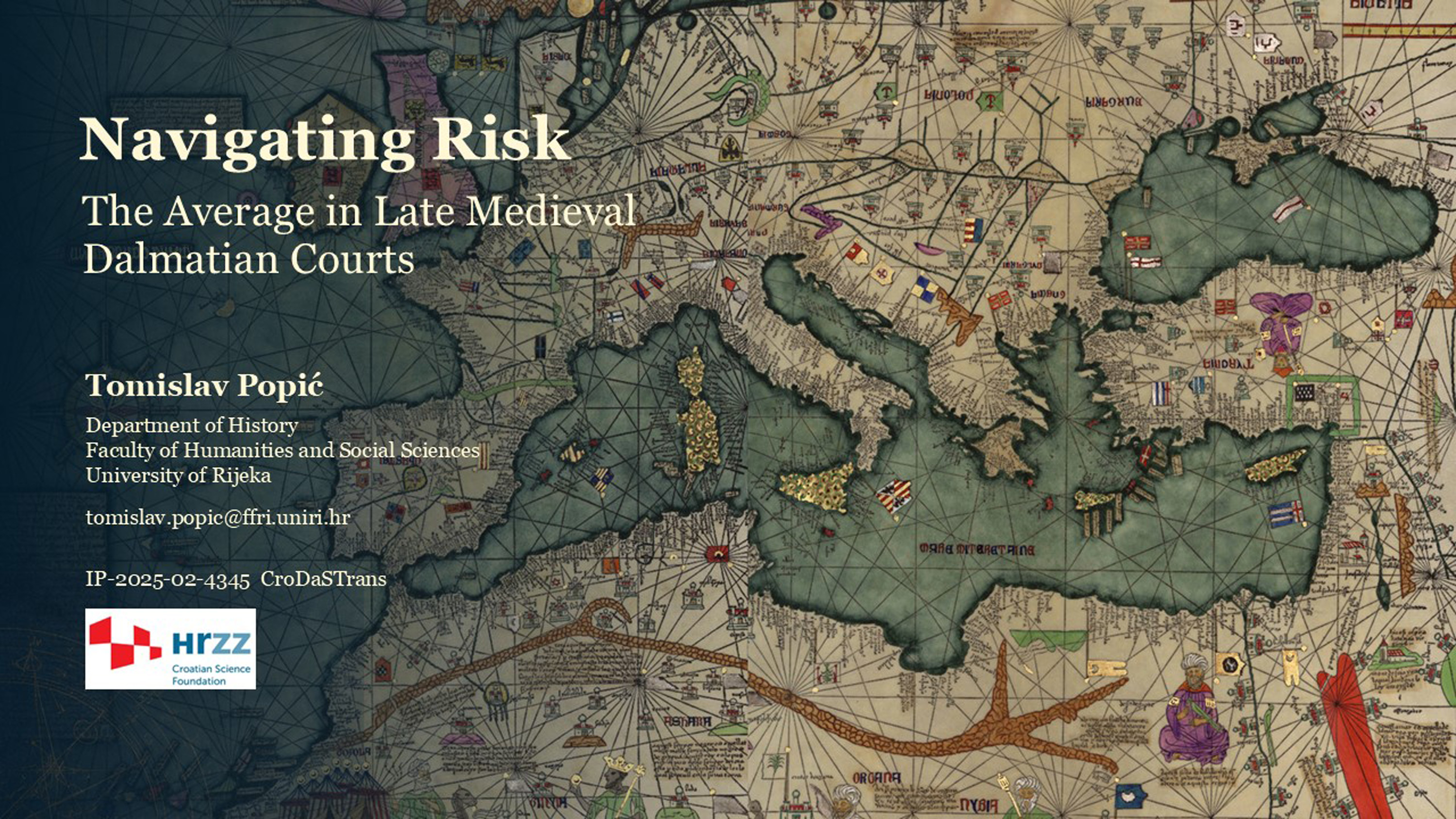
Project collaborator Associate Professor Tomislav Popić, PhD, from the Faculty of Humanities and Social Sciences of the University of Rijeka, delivered a presentation on May 25, 2026, titled Navigating Risk: The Average in Late Medieval Dalmatian Courts. The presentation was held at the international conference 7th International Conference of the Mediterranean Maritime History Network, taking place from May 25 to 29, 2026, at the University of Zadar.
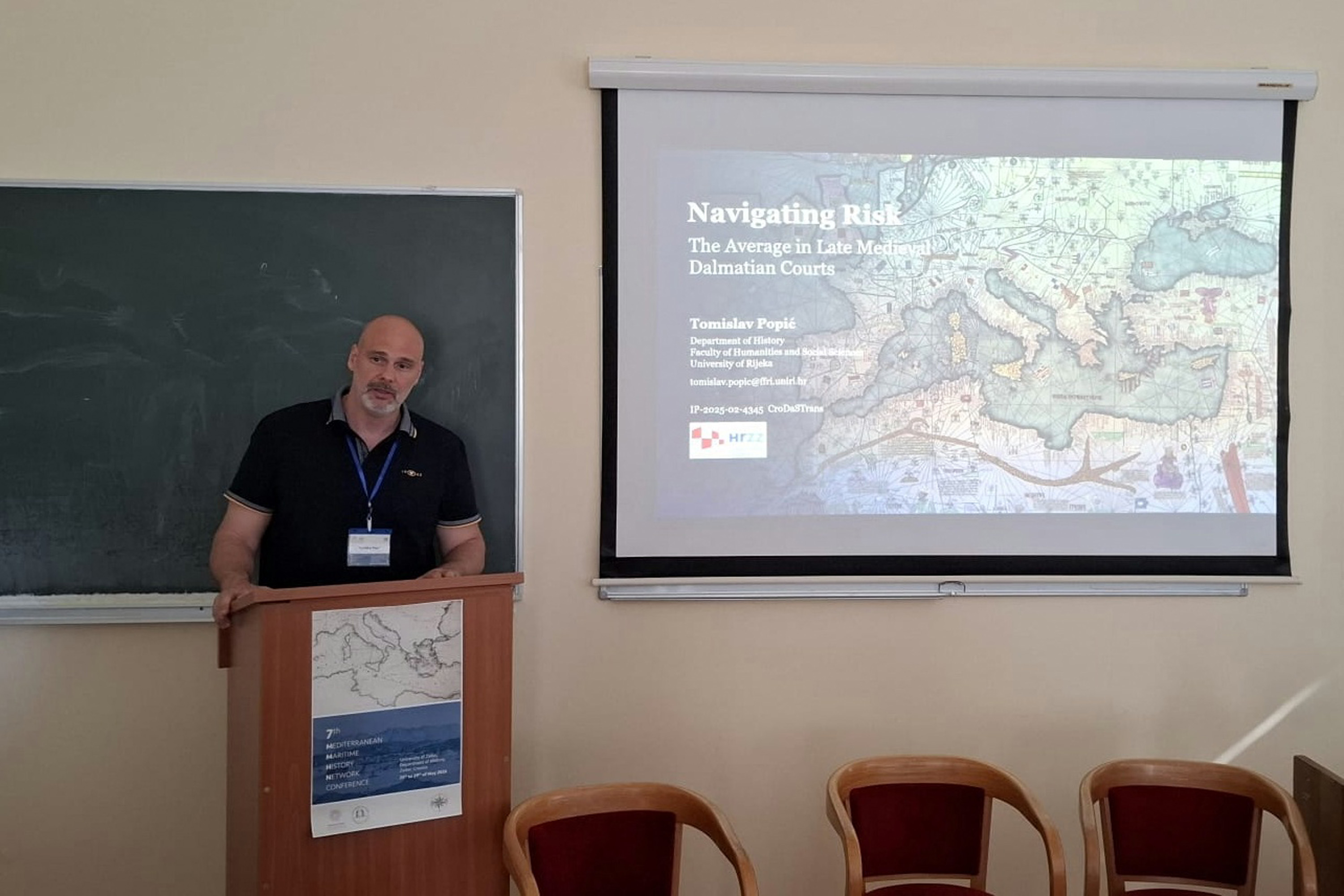
The presentation featured research results dedicated to the issue of maritime risk distribution in late medieval Dalmatia. At the center of the talk was the institute of "average" (general average), a legal mechanism through which losses incurred to save the ship, cargo, and passengers could be proportionally distributed among all participants in the maritime venture.
The starting point was the 1404 case of Radica from Nin, who sought compensation before the Zadar commercial-maritime court for items jettisoned during a storm on a voyage from Ancona. This seemingly minor dispute opened a broader question: when does an individual loss become a collective burden?
Special attention was given to two more complex Zadar disputes from 1387 and 1391. These cases demonstrate that the average was not merely an abstract rule written in statutes, but a living and contested legal practice. Parties interpreted the same maritime accidents in different ways: as a consequence of a storm and shared risk, or as the result of negligence, poor seamanship, vessel unseaworthiness, incorrect route choice, or even sabotage. Consequently, the court had to decide not only how to divide the damages but also how to legally conceptualize the accident itself.
The presentation showed that Zadar court records provide insights that statutes alone cannot: the manner in which legal rules were applied in specific situations through witness testimonies, assessments, negotiations, and judicial decisions. In this context, the average emerges as a practical language for negotiating the boundary between solidarity and responsibility in maritime ventures.
In conclusion, the Zadar examples confirm that the average in the late medieval Adriatic was an important instrument of risk management, similar to other regions of the Mediterranean. It did not prevent storms, shipwrecks, or extraordinary decisions at sea, but it offered a legal framework for dealing with their consequences. Thus, the Zadar court records reveal late medieval maritime law as a dynamic system in which danger, trust, responsibility, and shared interests were constantly intertwined.